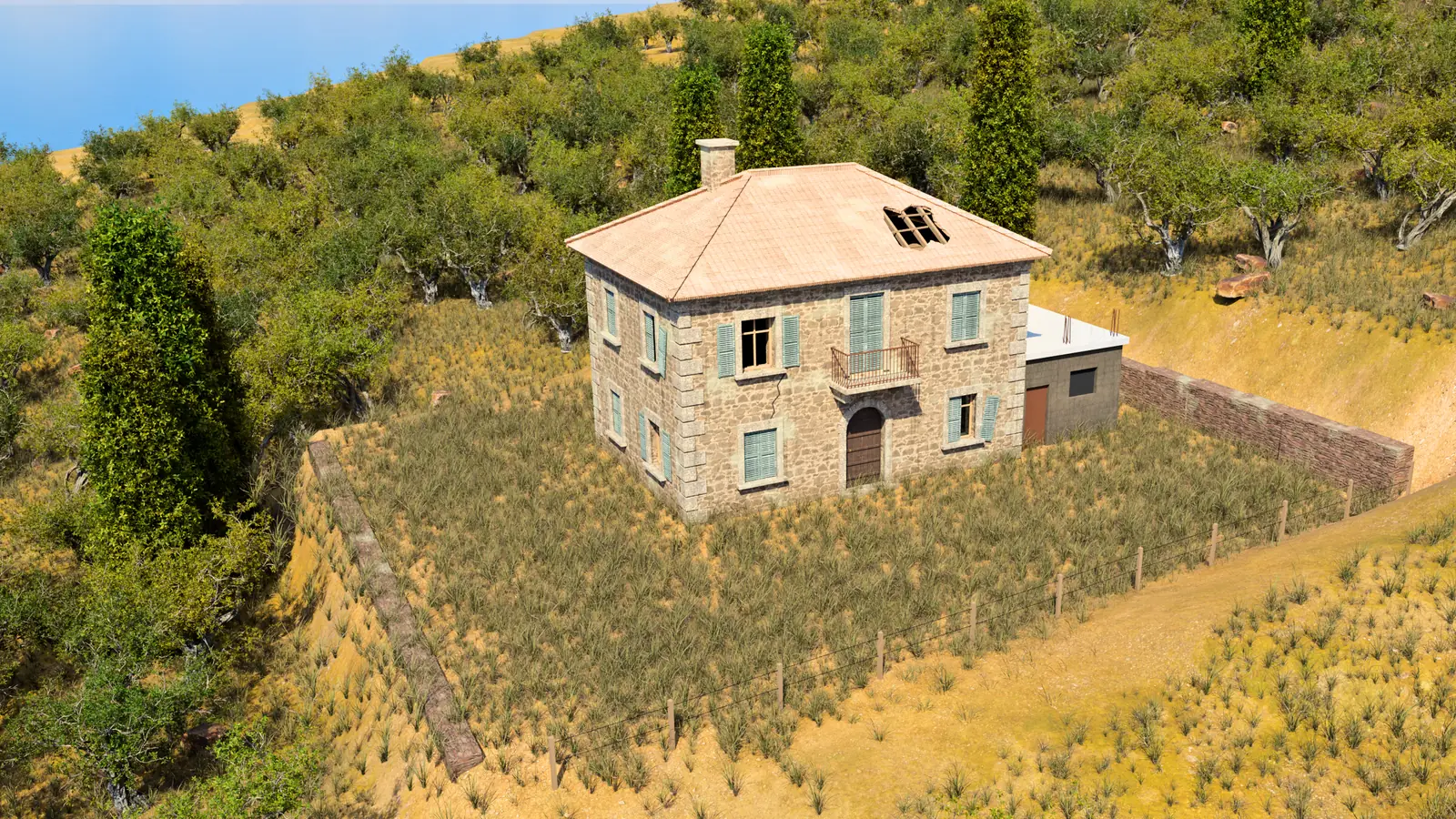
Typical technical risks in Corfu houses
Many houses on the island have grown in stages: an old stone core with thick rubble walls and timber floors, a concrete floor or extension added later, a veranda enclosed, a pool built on a levelled slope — and each stage may or may not appear on the permits. Much of the island is also hilly, coastal or wooded, so the plot often matters as much as the building.
- Rooms, floors or pools not shown on the permits
- Cracks and movement in old stone walls
- Heavy concrete slabs placed on old walls
- Later additions without a proper structural connection
- Decayed roof timbers, rising damp and cement renders that trap moisture
- Terrace and retaining walls on sloping plots
- Unclear boundaries, access or wastewater arrangements
Coastal, forest, archaeological and protected areas
What you may do with a property depends on where it stands. Near the sea, the foreshore and the beach zone are public land and building close to them is restricted. Land classed as forest can be restricted even when it looks like an ordinary overgrown plot, and areas of archaeological interest may need the archaeological service’s approval before digging or building.
Traditional settlements, listed buildings and the historic centre of Corfu town have their own architectural rules, and protected natural areas add others. Outside a town plan, whether and how much can be built depends on the plot’s area, frontage and access. If you plan to extend, add a pool or rebuild a ruin, ask these questions before the contract.
Corfu is a seismic area: what that means for renovation
Like the rest of the Ionian islands, Corfu lies in a seismic region. Older stone houses were not designed to modern earthquake-resistant standards, and later alterations — walls removed, openings widened, a heavy slab or an extra floor added — can leave them more vulnerable rather than less.
This is no reason to avoid an old house, but it shapes the renovation: works that change the structure are designed with earthquake action in mind — a ring beam tying the walls together, strengthened masonry, proper foundations for an extension. A pre-purchase survey shows where a structural assessment is advisable first.
The order of steps when buying
The steps are simple to list and easy to rush. The technical and the legal review work best in parallel, after the price is agreed in principle and before anything binding is signed, so that their findings can still change your decision — for example, the seller may be asked to regularize an addition before the sale, or its cost reflected in the price.
- Agree the price in principle, subject to checks
- Instruct your lawyer and your engineer at the same time
- Legal review: title, encumbrances and the draft contract
- Technical review: legality on site, condition and the plot
- Go through the findings and the indicative budget
- Negotiate, ask for issues to be resolved, or walk away
- Sign the final contract before the notary
Who does what: engineer, lawyer and notary
Legal questions are for your lawyer: whether and how you can buy as a foreign national, title, encumbrances, taxes and the contract. Some areas of Greece involve additional steps for buyers from outside the European Union, so raise your nationality at the start. The notary, a public official, draws up the final contract, which is signed before them.
The engineer’s part is technical: whether the building matches its permits, its condition, what the plot allows in practice and what the works are likely to cost. The two reviews are coordinated, with findings passed between them, while each professional remains responsible for their own advice.
What to budget for after you buy
The purchase price is rarely the whole cost of a Corfu house that needs work. Beyond the taxes and fees your lawyer will explain, plan for the works the survey identifies, the studies and permits they need, regularization where it applies, and a margin for what only appears once an old building is opened up.
Roofs, structural repairs and services are often the larger items, with windows, finishes and damp treatment after them. Pools and extensions come last, and only where the rules allow them. The indicative budget in the survey report shows the likely scale of each, so you can plan before you commit.